
The Hegarty Lab in the Department of Civil and Environmental Engineering at Case Western Reserve University draws individuals from many different disciplinary backgrounds who are united by an interest in understanding and engineering microbiomes.
Bridget Hegarty
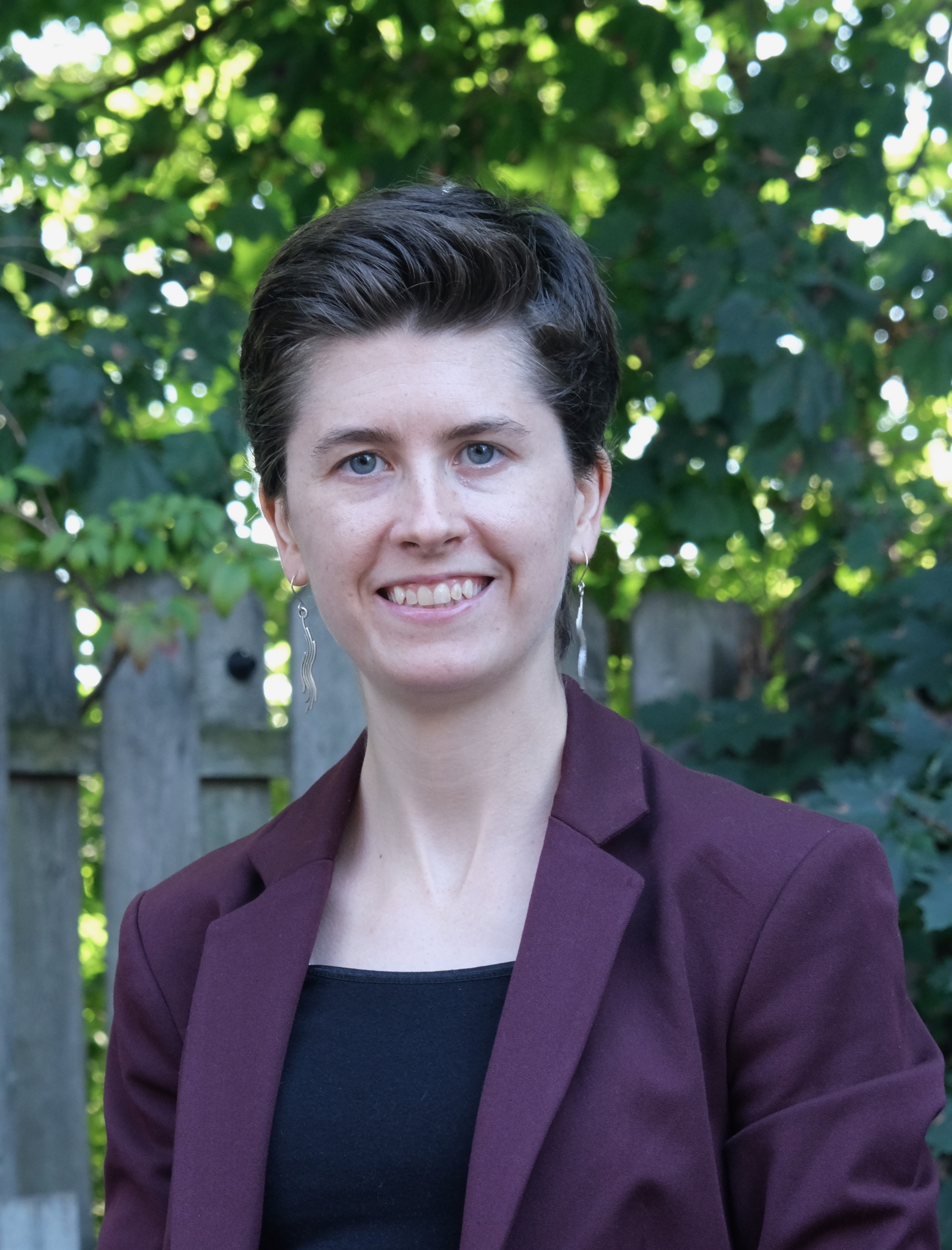
Dr. Bridget Hegarty is an assistant professor in the Department of Civil and Environmental Engineering at Case Western Reserve University. Her research interests encompass the microbiology of engineered systems, ranging from homes and drinking water pipes to constructed wetlands. She is particularly driven to understand the viral and fungal communities of environments that have been previously overlooked. Before starting at Case Western Reserve, she was a postdoc at the University of Michigan studying the viral ecology of drinking water distribution systems. She earned her PhD at Yale University, where her dissertation focused on the fungi of homes with mold damage, including designing a machine learning tool capable of using the fungal signature of homes to distinguish whether or not a home has mold damage. Beyond the lab, she loves skiing (both downhill and cross-country), photography, traveling and reading.
CV | Google Scholar | Twitter | Github
Current Lab Members
Sadia Marjia Ferdous

Muhtashim Rafiq Chowdhury

Muhtashim Rafiq Chowdhury is a Ph.D. student in the Civil and Environmental Engineering department. He completed his B.Sc. in Civil Engineering from Bangladesh University of Engineering and Technology. He worked for more than 4 years at the Institute of Water Modelling, Bangladesh in the topographic and bathymetric surveying field. He was also the lab-in-charge of the water quality lab there. He is interested in water quality, treatment, environmental microbiology and UAV mapping. His research focuses on understanding the role of microorganisms in improving air and water quality. He enjoys hiking, watching movies, reading, and playing football.
Moumita Mondal
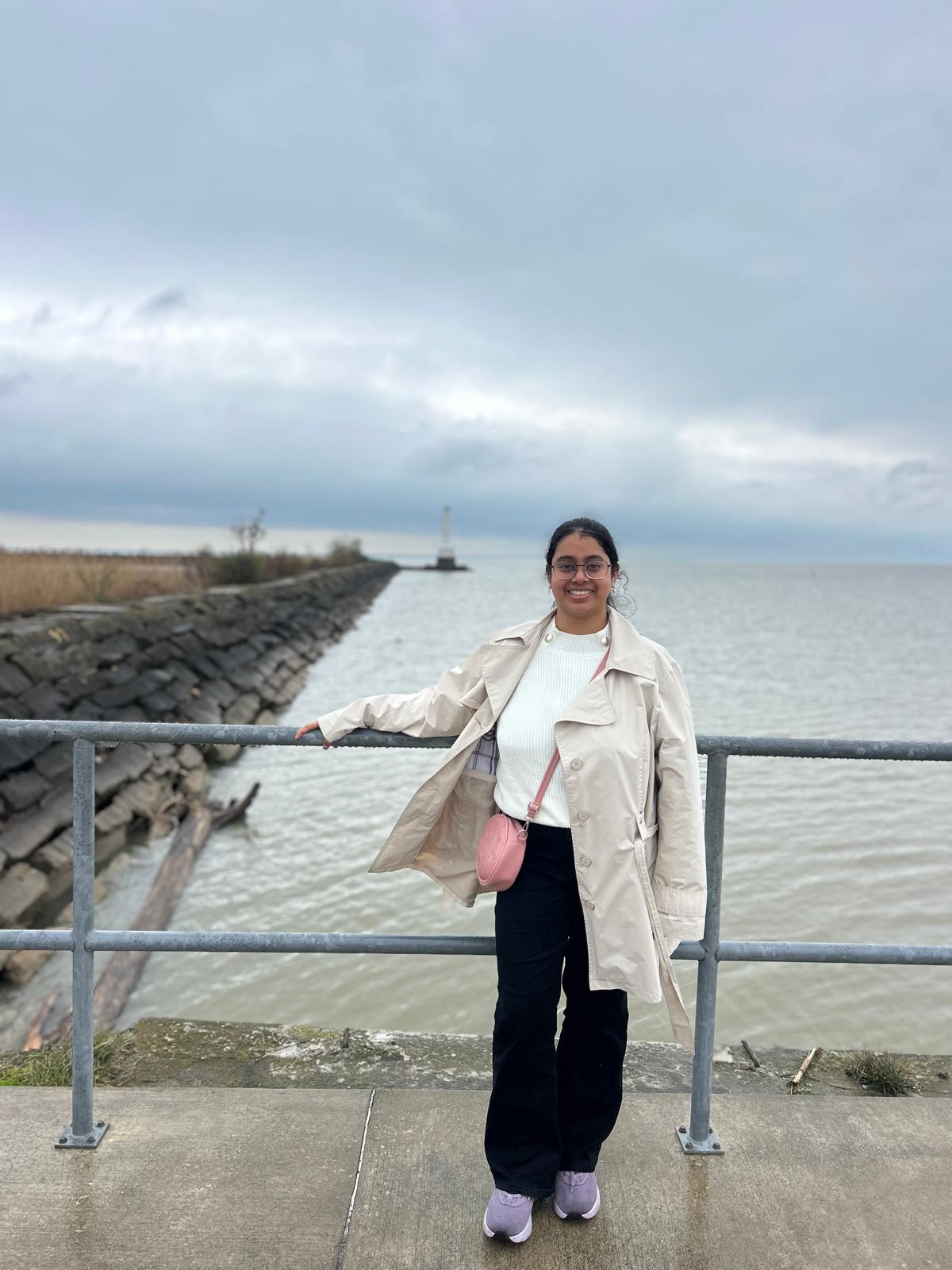
Moumita Mondal is a Ph.D. student in the Civil and Environmental Engineering department. She completed her B.tech in Civil Engineering from Jalpaiguri Government Engineering College in West Bengal, India. Her research interest focuses on Indoor air quality, microbial metabolism, environmental microbiology. She is particularly interested in understanding how microbial metabolism changes due to different mVOCs and different surfaces. Besides, she enjoys gardening (loves plants and flowers), travelling, cooking (and definitely eating!).
Undergrad Lab Members
Chaery Kim
Vianney Hernandez
Grace Reynolds
JB Lim
Thando Ndlovu
Former Lab Members
Nate Poshkus (Civil Engineering, BS '26)
Joshua Eagle (Civil Engineering, BS '26)
Laerke Kristensen (Civil Engineering, BS '26)
Shruti Vasagiri (Biology and CS, BS '26)
Caroline Kreutzberg (Mechanical Engineering, BS '26)
Abigail Leslie (Biochemistry, BS '25)
Chloe Maciejewski (Civil Engineering, Macromolecular Engineering, BS '25)
Brian Vance (Civil Engineering, BS '25)
Maddie Maduzia (Biology and Environmental Studies, BS)
Delphine Clatanoff (Biology and International Studies, BS '23)
Mary Harten (Mechanical Engineering, BS '23)
Songchen Li (Civil Engineering, BS '23)
Emily Rego
Christopher Thomas (Mechanical Engineering, BS '23)
Joining the Hegarty Lab
Undergrads
If you're a CWRU undergrad interested in research in the Hegarty Lab, I encourage you to first register for Prof. Hegarty's class ECIV 158: Environmental Biotechnology Laboratory Methods. This will introduce you to the biomolecular methods that are central to the lab's research. It is a one credit class offered each spring. In Spring 2027, it will be Wed 12:35-2:45pm. If you are reaching out and haven't taken this yet, include a brief explanation of why (e.g., maybe you have already taken something similar in another department).
If you are interested in a computational project, then you don't need to first take ECIV 158. Send a concise email with your resume and a brief explanation of why you are interested in our lab's research and how doing research would support your personal goals. I only respond to emails that include your favorite color.
Grad students and others
For those interested in a PhD position, I recommend emailing between June and October to express your interest in the lab, as we evaluate applications in December-January. If you email me outside of this window, I probably won't respond. To increase your likelihood of getting a response, include your favorite color. A concise email that includes your resume and briefly explains why you are interested in our lab's research and how doing research would support your career goals is most likely to have a favorable response.
I rarely have funding available for postdocs. However, I am open to applying for a grant together. Note that this has low odds of success and would take at least six months.
A note about AI written emails
If you are using an AI model when emailing, include how you used it. AI tools can be a great asset and are (sometimes) used in our lab. However, their emails are typically less compelling than ones where the applicant put more care into its writing.